
Remembering Pascal Potaire
An archive interview with the Loir-et-Cher vigneron - and pétillant naturel innovator - behind Les Capriades, who passed away on July 26th.
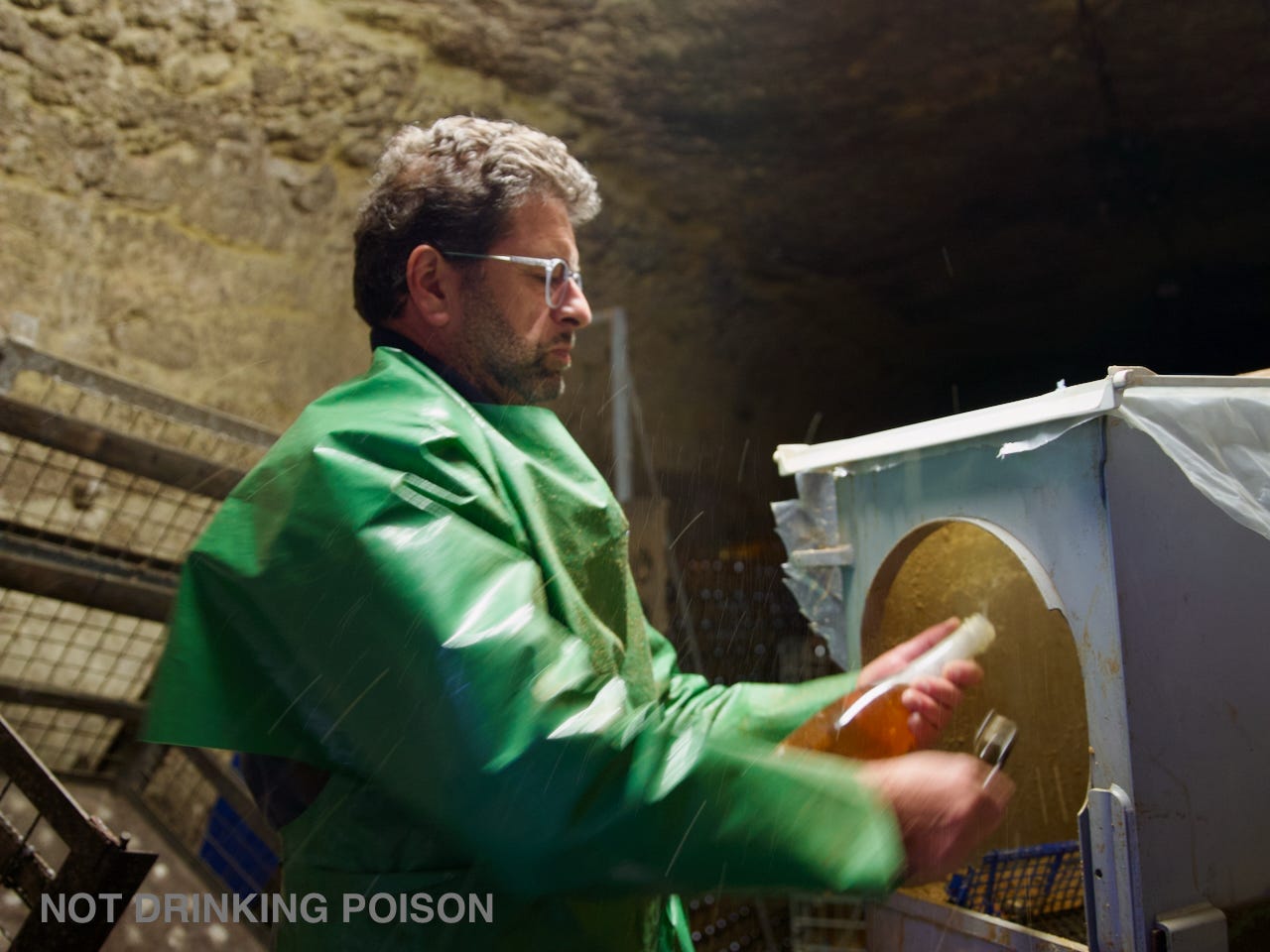
Loir-et-Cher vigneron-négociant Pascal Potaire, who in the 1990s figured among the key progenitors of the wine style known globally today as pétillant naturel, passed away on Sunday, July 26th. The cause was cardiac arrest. A true winemaker’s winemaker who maintained strong relationships in the less dogmatic wing of the French natural wine scene even as he upheld more rigorous standards (eschewing filtration and sulfite addition entirely) in his own work with Moses Gadouche as Les Capriades, Potaire did more than any other winemaker of his generation to refine and champion the production of fine pétillant naturel.
A native of Le Mans, born in 1963, Potaire initially worked in wine retail, before beginning his career in wine production in 1995 alongside Nicolas Renard, first at Renard’s erstwhile estate in Jasnières and later for Prince Philippe Poniatowski at Clos Baudoin in Vouvray (1997-2001 I believe). It was in the mid-nineties that Potaire met Vouvray vigneron Christian Chaussard, who coined the term pétillant naturel to refer to the experiments he and friends like Thierry Puzelat were conducting with méthode ancestral winemaking, i.e. the production of sparkling wine without the addition of exogenous yeast or sugar.
From 2002-2004, Potaire worked for Japanese natural wine importer Junko Arai at her Loir-et-Cher estate Le Bois Lucas. His work as Les Capriades began in 2005 as a solo project, after he acquired his first parcels of chardonnay and menu pineau from local natural wine pioneers Beatrice and Michel Augé. With the arrival in 2011 of his associate Moses Gadouche, Les Capriades branched out into négociant work, soon focusing entirely on sparkling wine production. 2014 saw the partners organize the first public edition of their natural sparkling wine fair Bulles au Centre (which they’d begun on a smaller scale in 2012). In 2018, Les Capriades would expand into the production of cider, poiré, and blends of grape must with various fruits, before the partners decided to cease their collaboration in 2023.
Potaire’s key insight, in his work as Les Capriades, was that pétillant-naturels could be rendered biologically stable by successive stages of racking combined with very precise manual disgorgement practices, thereby eliminating any rationale for filtration or sulfite addition. Where beginner pet-nat producers might understandably take every precaution not to bottle with too much residual sugar remaining in a wine - to avoid bottles exploding under too-great pressure - Potaire understood that precise, effective disgorgement requires a sufficiently high pressure within bottles. It was thanks to such comprehensive expulsion of fermentary matter that he was able to regularly produce unsulfited demi-sec pét-nats, like their off-dry rosé “Piège à Filles,” which once generated a whiff of controversy in the USA for its risqué name. (“Panty dropper” would be the colloquial translation.)
When I last visited Les Capriades in Faverolles-sur-Cher in 2023, the estate’s closure had recently been announced and Potaire was in already in a reflective mood, appraising what he had been able to achieve in the estate’s eighteen years of operation. He noted there had never been a major article in the French media about pétillant-naturels; all the significant media interest had come from abroad. (“No man is a prophet in his own country, as they say.”) He lamented there was no book in French (or any language, as far as we were aware) on pét-nat production. He compared the contemporary glut of cloudy, undisgorged, rush-job pét-nats to primeur wine production, which, as with the Beaujolais Nouveau phenomenon, could only further devalue the category in the minds of wine drinkers.
“I would have thought, given volume that we sell in France, we’d have evolved our image a bit more, to inspire newcomers to do the fundamental work,” he said. “Today there are people who make age-worthy pét-nats. But not many.”
Potaire believed in the pét-nat as the potential equal, in terms of complexity, of any champagne, or still wine for that matter. As pét-nat production became part of the global zeitgeist in the 2010s, his became a lonely position. Yet he remained the go-to reference for fellow natural winemakers seeking to experiment with pétillant-naturel. One who springs to mind is Domaine des Miquettes’ Paul Estève, who once made an astounding sparkling rkatsiteli (!) following Potaire’s advice. Closer to home, Potaire was a valued collaborator and mentor to winemakers like Noëlla Morantin, Laurent Saillard, and Marie Rocher.
He remained, despite the closure of Les Capriades, committed to its founding ideas, continuing to produce small quantities of sparkling wine from two parcels of white grapes he retained. The pét-nats of the future, he thought, would be ciders and poirés, which would retain better acidity in a warming climate.
“If you deprived me of my metier immediately, I’d die,” he told me back in 2023. “I feel like continuing, because I’m not ready to stop. I still have lots of ideas.”
Amen to that, Pascal. The ideas will live on! The rest of the wine world is still catching up to them, after all.
For more on Pascal Potaire, check out out this 2023 feature on the closing chapter of Les Capriades.
Subscribers can also scroll below for extended interview material from the same visit, including Potaire’s thoughts on the first pétillant rosé he loved, the importance of long aging sur lattes, and the historical use of pears in Champagne.
PASCAL POTAIRE: AN INTERVIEW
This interview was conducted on May 24th, 2023. It has been condensed and edited for clarity.
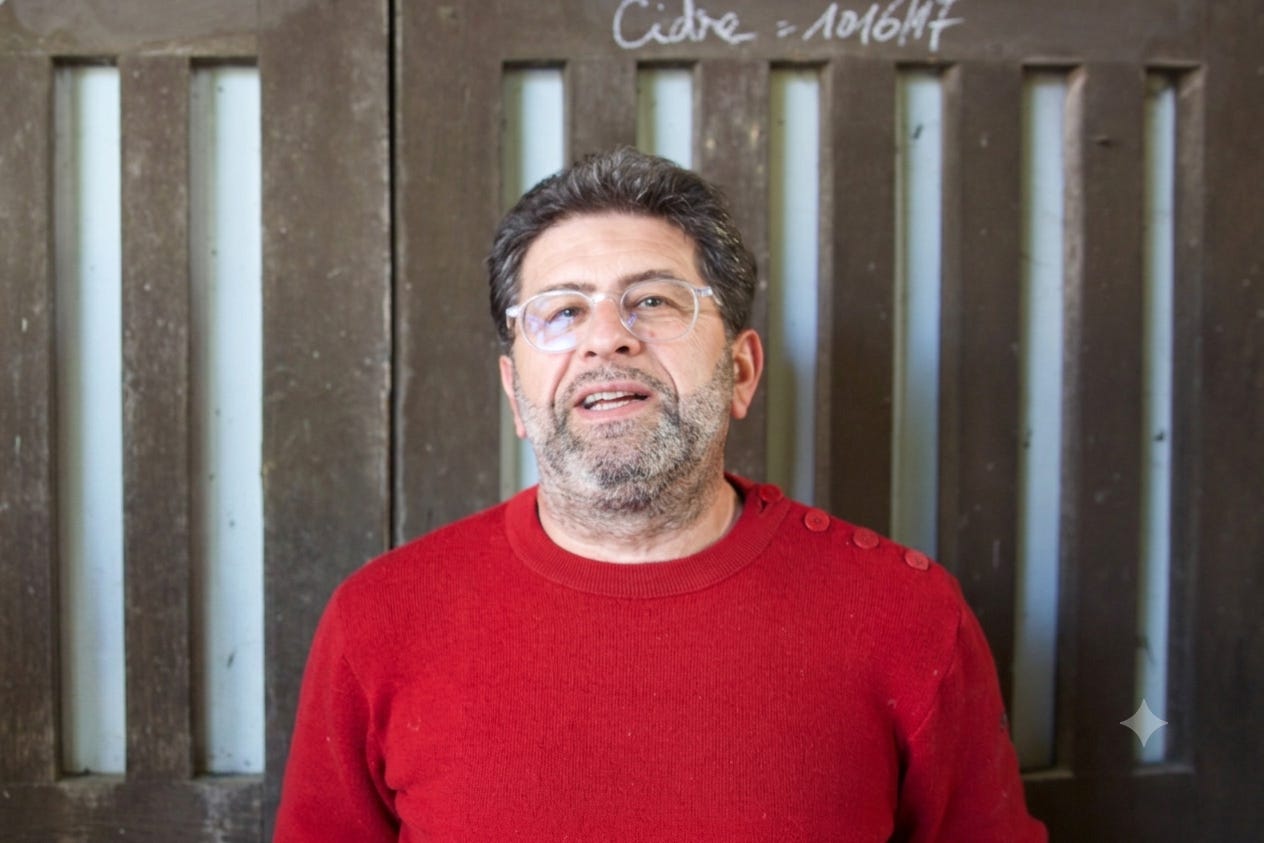
NDP: What were some of the sparkling wines that inspired you initially? What were your references back in the 1990s?